For this portion of your portfolio you will return to your Imagined Classroom and work to (re)imagine it in light of the things we have learned in class. You will also include a reflective piece that describes why you made changes (or didn't) to your original classroom description. In addition to being part of your on-line portfolio.
1. Five images (you can take them or they can come from the Internet [provide proper credit]). These images should reflect, in some way, what you imagine your classroom will look like once you are a teacher. Please annotate your images by providing a description of the image and how it relates to your future classroom.

The students will sit in groups. (http://www2.mcsdk12.org/kam21/the%20classroom/desks.JPG)

There will be inspirational posters on the walls. (http://aboveaverage.me/wp-content/blogs.dir/2/files/motivational-posters-3/0079-believe_1920x1200.jpg?8d7c13)

There will be a box where students can submit comments, questions, and concerns. (http://www.challahcrumbs.com/images/questionBox.jpg)

I will have bread, peanut butter, honey, and granola bars for when students need food. (http://farm3.static.flickr.com/2298/2274417055_1f824c2388.jpg)
 There will be a bookshelf with books that students can check out if they want to learn more about science. (
http://www.teamamericaprops.com/TeamAmerica/TeamAmerica_GarysBookshelf.jpg)
2. Imagine the surrounding in your classroom. What does the room look like? What resources are available for students? How are the resources used during the lesson?
The room is decorated with inspirational posters as well as science ones. It looks organized, and desks are organized into groups. I also have a bookshelf filled with books that students can read for fun as well as for extra credit. I also have an anonymous concerns and complaints box next to the box where students can turn in assignments.
During the lesson, there are labs. I also want to have a small motivational thought at the beginning of class so that students know that I care about their well-being beyond how they do academically; so whether I use a quote on the wall or just write one on the board, I'll use inspirational thoughts. Students can turn in slips of paper into the concern box after class as well as check out books.
3. Describe the students in your classroom. What are their backgrounds? What are their interests? What are they doing during the lesson?
My students are typical. They are varied in ability, background, culture, interests, and interest level as far as my class is concerned. Honestly, my image of my classroom looks like the classrooms that I went to high school in. Students are more concerned with socializing than the lesson. A lot of them don't speak English, and they don't necessarily value education. On the other hand, there are students that try really hard to pay attention despite the chaos. They are also interested in TV shows, gossip, and sports. They hate being patronized by teachers, and if you do speak condescendingly, your class turns against you and you can't get anything done. So during the lesson, I hope to incorporate a lot of their interests so that they will feel more inclined to pay attention. For instance, as a physics teacher, I want to take a popular film and apply it to all of the units that we go through.
4. Describe you classroom policies. What are you classroom rules? What is your discipline plan? What are your homework policies?
Besides enforcing school wide rules, the main rule in the classroom will be based on respect. So interrupting, teasing, and ignoring people will be against the rules. The main thing though is fostering an environment that facilitates respect. Disciplinary action will probably be something that I discuss with the class at the beginning of the year, and the consequences are decided on as a class. I find that when people participate in creating something, they are more likely to uphold it in the future. Since learning is the primary objective, they can always do alternative versions of homework assignments to improve homework grades (the alternative versions will probably come from different textbooks than the ones that the students use) or come in for an oral discussion about the subject matter. Students can work together on homework assignments, but they have to show their own work. Homework can be turned in late up to three weeks after their original due date.
5. Describe a typical lesson you will teach in your classroom. What will you teach? What is the topic? Why did you choose this topic? How will you teach it? What is the main thing you want students to learn during this lesson?
My lesson plans will follow a three day pattern, I think. The first day will be about concepts, the second day with math and problems behind the concepts, and the third day will focus on labs dealing with teh concepts. So if it is about gravity, the first day we will talk about constant acceleration. The second day we will do problems about dropping balls from buildings and calculating speed and such. The third day, we will do a lab dropping balls. The topics will be physics topics since that is what I will teach. I teach it mostly through discussion and hands on activities where students investigate the laws of physics themselves. The main thing that I want my students to learn during this lesson is that acceleration is constant while velocity increases as things fall.
6. Imagine your work as a teacher during this lesson. What are you doing during the lesson?
I am walking around helping with labs and leading discussions. Generally speaking, I encourage students to ask each other questions first, and I follow the flow of discussion that students want as long as it is related to 1)physics, or 2) topics that will help them treat each other and themselves better. While I teach physics, there are many other problems that hinder student learning, so if I can ameliorate those other factors, then I will. I keep an eye out for disrespect among the students; I don't want anyone to be marginalized because of ethnicity, orientation, class, or any other factor.
7. Imagine your students again, what are they doing during the lesson?
They are discussing the topic with me as well as with each other. They are drawing pictures and dropping balls. Some people are goofing off, and if they're off task for too long, then I'll say something to them. Some people will probably be confused or frustrated, in which case, I will ask them if they have any questions.
8. Imagine how you will assess your students' learning and achievement. How will you know they have learned?
I will know that they have learned when I can introduce new situations to them, and then can conceptually tell me what will happen. For instance, I'll ask them what happens when I drop things on the moon versus on the earth; if they can tell me that the objects fall at the same rate, I'll know that they've learned something. I'll mostly use their ability to explain with words, because I understand that the ability to manipulate equations shows more understanding in math than in physics.
Reflection on changes:
The first change I made was omitting any expectations of specialized or advanced technology. I now know that it is unreasonable to expect lab equipment, projectors, or smart phones in my classroom. And if all of my students can't use smart phones, then I shouldn't assign things that require a smart phone; sounds logical, doesn't it? I'll make do with ordinary objects to start with, and then move from there depending on the sort of school that I'm at.
Secondly, I added the fact that I would have food available to students. As a college student, I know how hard it can be to concentrate when you haven't eaten breakfast, let alone if you're used to deficiencies in food; it's probably even harder when you're younger and aren't as practiced in extended concentration. I don't want to punish students for things that they can't control, so I'll have food available for when they need it.
Thirdly, I'm different when I envision my classroom. I'm more aware of prejudices against minorities, different sexual orientations, and perhaps my subconscious tendencies. I want to be more aware of how I treat boys versus girls, if I try to press gender stereotypes on students, and if I'm more impatient with minority students than white students. At the end of each day, I want to take a half hour or so to review my behavior; I know that I have a long way to go, but I really do want to be a good teacher that treats ALL of my students the way that the deserve to be treated. I think that probably the best thing that this class gave me was a greater awareness for the fact that ALL human beings have prejudices, therefore I can never be done trying to be fair and kind and than I am.

The students will sit in groups. (http://www2.mcsdk12.org/kam21/the%20classroom/desks.JPG)

There will be inspirational posters on the walls. (http://aboveaverage.me/wp-content/blogs.dir/2/files/motivational-posters-3/0079-believe_1920x1200.jpg?8d7c13)

There will be a box where students can submit comments, questions, and concerns. (http://www.challahcrumbs.com/images/questionBox.jpg)
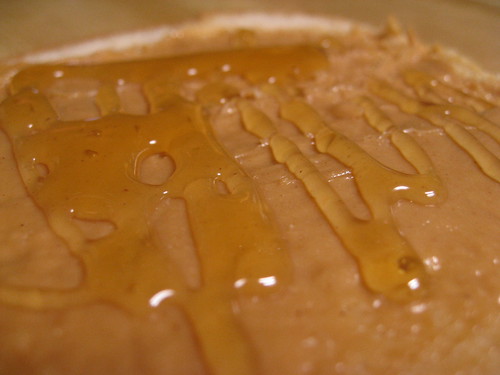
I will have bread, peanut butter, honey, and granola bars for when students need food. (http://farm3.static.flickr.com/2298/2274417055_1f824c2388.jpg)
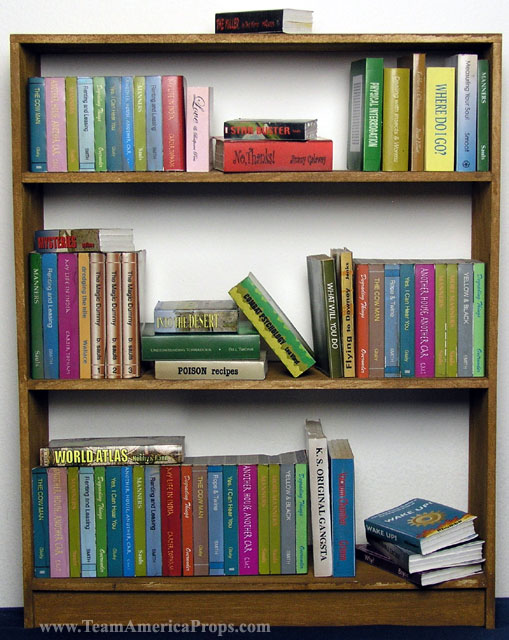
http://www.teamamericaprops.com/TeamAmerica/TeamAmerica_GarysBookshelf.jpg)
2. Imagine the surrounding in your classroom. What does the room look like? What resources are available for students? How are the resources used during the lesson?
The room is decorated with inspirational posters as well as science ones. It looks organized, and desks are organized into groups. I also have a bookshelf filled with books that students can read for fun as well as for extra credit. I also have an anonymous concerns and complaints box next to the box where students can turn in assignments.
During the lesson, there are labs. I also want to have a small motivational thought at the beginning of class so that students know that I care about their well-being beyond how they do academically; so whether I use a quote on the wall or just write one on the board, I'll use inspirational thoughts. Students can turn in slips of paper into the concern box after class as well as check out books.
3. Describe the students in your classroom. What are their backgrounds? What are their interests? What are they doing during the lesson?
My students are typical. They are varied in ability, background, culture, interests, and interest level as far as my class is concerned. Honestly, my image of my classroom looks like the classrooms that I went to high school in. Students are more concerned with socializing than the lesson. A lot of them don't speak English, and they don't necessarily value education. On the other hand, there are students that try really hard to pay attention despite the chaos. They are also interested in TV shows, gossip, and sports. They hate being patronized by teachers, and if you do speak condescendingly, your class turns against you and you can't get anything done. So during the lesson, I hope to incorporate a lot of their interests so that they will feel more inclined to pay attention. For instance, as a physics teacher, I want to take a popular film and apply it to all of the units that we go through.
4. Describe you classroom policies. What are you classroom rules? What is your discipline plan? What are your homework policies?
Besides enforcing school wide rules, the main rule in the classroom will be based on respect. So interrupting, teasing, and ignoring people will be against the rules. The main thing though is fostering an environment that facilitates respect. Disciplinary action will probably be something that I discuss with the class at the beginning of the year, and the consequences are decided on as a class. I find that when people participate in creating something, they are more likely to uphold it in the future. Since learning is the primary objective, they can always do alternative versions of homework assignments to improve homework grades (the alternative versions will probably come from different textbooks than the ones that the students use) or come in for an oral discussion about the subject matter. Students can work together on homework assignments, but they have to show their own work. Homework can be turned in late up to three weeks after their original due date.
5. Describe a typical lesson you will teach in your classroom. What will you teach? What is the topic? Why did you choose this topic? How will you teach it? What is the main thing you want students to learn during this lesson?
My lesson plans will follow a three day pattern, I think. The first day will be about concepts, the second day with math and problems behind the concepts, and the third day will focus on labs dealing with teh concepts. So if it is about gravity, the first day we will talk about constant acceleration. The second day we will do problems about dropping balls from buildings and calculating speed and such. The third day, we will do a lab dropping balls. The topics will be physics topics since that is what I will teach. I teach it mostly through discussion and hands on activities where students investigate the laws of physics themselves. The main thing that I want my students to learn during this lesson is that acceleration is constant while velocity increases as things fall.
6. Imagine your work as a teacher during this lesson. What are you doing during the lesson?
I am walking around helping with labs and leading discussions. Generally speaking, I encourage students to ask each other questions first, and I follow the flow of discussion that students want as long as it is related to 1)physics, or 2) topics that will help them treat each other and themselves better. While I teach physics, there are many other problems that hinder student learning, so if I can ameliorate those other factors, then I will. I keep an eye out for disrespect among the students; I don't want anyone to be marginalized because of ethnicity, orientation, class, or any other factor.
7. Imagine your students again, what are they doing during the lesson?
They are discussing the topic with me as well as with each other. They are drawing pictures and dropping balls. Some people are goofing off, and if they're off task for too long, then I'll say something to them. Some people will probably be confused or frustrated, in which case, I will ask them if they have any questions.
8. Imagine how you will assess your students' learning and achievement. How will you know they have learned?
I will know that they have learned when I can introduce new situations to them, and then can conceptually tell me what will happen. For instance, I'll ask them what happens when I drop things on the moon versus on the earth; if they can tell me that the objects fall at the same rate, I'll know that they've learned something. I'll mostly use their ability to explain with words, because I understand that the ability to manipulate equations shows more understanding in math than in physics.
Reflection on changes:
The first change I made was omitting any expectations of specialized or advanced technology. I now know that it is unreasonable to expect lab equipment, projectors, or smart phones in my classroom. And if all of my students can't use smart phones, then I shouldn't assign things that require a smart phone; sounds logical, doesn't it? I'll make do with ordinary objects to start with, and then move from there depending on the sort of school that I'm at.
Secondly, I added the fact that I would have food available to students. As a college student, I know how hard it can be to concentrate when you haven't eaten breakfast, let alone if you're used to deficiencies in food; it's probably even harder when you're younger and aren't as practiced in extended concentration. I don't want to punish students for things that they can't control, so I'll have food available for when they need it.
Thirdly, I'm different when I envision my classroom. I'm more aware of prejudices against minorities, different sexual orientations, and perhaps my subconscious tendencies. I want to be more aware of how I treat boys versus girls, if I try to press gender stereotypes on students, and if I'm more impatient with minority students than white students. At the end of each day, I want to take a half hour or so to review my behavior; I know that I have a long way to go, but I really do want to be a good teacher that treats ALL of my students the way that the deserve to be treated. I think that probably the best thing that this class gave me was a greater awareness for the fact that ALL human beings have prejudices, therefore I can never be done trying to be fair and kind and than I am.
